How to Build a Content Moat Around Your Business That Competitors Cannot Copy
A step-by-step guide to creating comprehensive website content that makes it nearly impossible for competitors to outrank you on Google.
Adam Yong
RM1 Website

What Is a Content Moat and Why Should You Care?
In medieval times, castles were surrounded by deep moats filled with water to keep invaders out. The wider and deeper the moat, the harder it was to breach. In the world of SEO and digital marketing, a content moat serves the same purpose: it is a barrier of comprehensive, high-quality website content that protects your Google rankings from competitors trying to overtake you.
I have been building content moats for Malaysian businesses for over 20 years, and I can tell you that it is the single most sustainable competitive advantage you can create online. Backlinks can be bought. Ads can be outbid. But a deep, interconnected body of expert content that demonstrates genuine topical authority? That takes months or years for a competitor to replicate.
Let me show you exactly how to build one for your business.
Why Traditional SEO Is No Longer Enough
A decade ago, SEO was simpler. You would optimise a few pages for your target keywords, build some backlinks, and watch your rankings climb. Those days are over.
In 2026, Google’s algorithm evaluates your entire website as a knowledge entity. It does not just look at individual pages, it assesses whether your website comprehensively covers a topic, whether your content demonstrates genuine expertise, and whether your information is interconnected in ways that help users find answers to their questions.
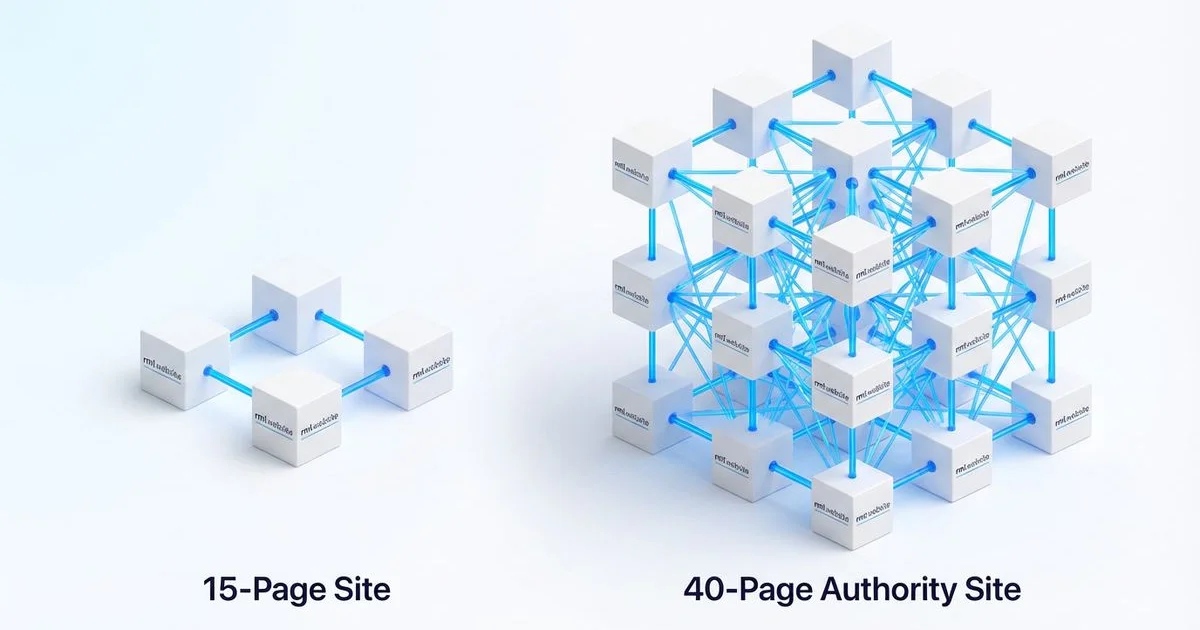
This shift is why so many Malaysian SMEs with thin, 5-page websites are struggling to rank, even when they have been online for years. A competitor with a newer but more comprehensive website can leapfrog them in search results within months.
A content moat protects you from this. When you have thoroughly covered your topic from every angle, a new competitor cannot simply create a few pages and outrank you. They would need to match your entire body of work, which is exactly the barrier you want to create.

Step 1: Map Your Entire Topic Universe
The first step in building a content moat is understanding the full scope of your topic. Most Malaysian business owners think too narrowly about their content. A plumber thinks they need a page about “plumbing services.” An accountant thinks they need a page about “accounting services.” That is like building a castle with no walls.
Here is how to properly map your topic universe:
Start with your core services. List every individual service you offer. Not “plumbing services” but “pipe repair,” “water heater installation,” “drain cleaning,” “toilet repair,” “tap replacement,” “pipe relining,” and so on.
Add common customer questions. For each service, write down every question a customer might ask before, during, or after using that service. How much does it cost? How long does it take? What are the warning signs? How do I maintain it? What are the alternatives?
Include comparison and decision content. People research before they buy. They search for “copper pipes vs PVC pipes Malaysia” or “should I repair or replace my water heater.” This comparison content captures people in the decision-making stage.
Add local context. Malaysian businesses need location-specific content. What are common plumbing issues in high-rise condos in KL? How does tropical weather affect pipes? What are the regulations for bathroom renovation in Malaysia?
By the time you finish this exercise, you should have 40 to 80+ content ideas, each of which becomes a building block in your content moat.
Step 2: Create Pillar Pages That Dominate
Pillar pages are the foundation of your content moat. These are comprehensive, long-form pages (2,000 to 3,000 words) that thoroughly cover a core topic and link out to more specific supporting content.
For example, a cleaning company in Malaysia might have these pillar pages:
- Home Cleaning Services (covers all residential cleaning types)
- Office Cleaning Services (covers all commercial cleaning types)
- Deep Cleaning Services (covers specialised cleaning like post-renovation, move-in/move-out)
- Disinfection Services (covers sanitisation, anti-microbial treatments)
Each pillar page serves as a hub, linking to blog posts, FAQ sections, and other detailed content that expands on specific aspects of the topic.
The key to effective pillar pages is depth without fluff. Every sentence should provide genuine value. Cover what the service involves, who needs it, when to get it done, what to expect, how to prepare, and what results to anticipate. Use your real experience serving Malaysian customers to provide insights that generic content cannot match.
Step 3: Build Supporting Content Clusters
Supporting content is where the moat gets wider and deeper. For each pillar page, create 5 to 10 pieces of supporting content that dive into specific subtopics.
Here is an example cluster for a pillar page on “Home Cleaning Services”:
- Blog: “How Often Should You Deep Clean Your Home in Malaysia’s Humid Climate?”
- Blog: “Spring Cleaning Checklist for Malaysian Homes (2026 Edition)”
- Blog: “How to Remove Mould and Mildew in Malaysian Apartments”
- Blog: “The Real Cost of Professional Home Cleaning in KL and Selangor”
- Blog: “DIY Cleaning vs Professional Cleaning: An Honest Comparison”
- FAQ: “What to Expect from a Professional Home Cleaning Service”
- Guide: “How to Prepare Your Home Before the Cleaners Arrive”
Each piece of supporting content links back to the pillar page and to other relevant content within the cluster. This creates an interconnected web that Google recognises as comprehensive topical coverage.
Step 4: Interlink Everything Strategically
Internal linking is the cement that holds your content moat together. Without proper internal links, your content exists as isolated pages. With strategic linking, it becomes a unified knowledge base that Google can crawl and understand as a coherent whole.
Follow these linking principles:
Link from supporting content to pillar pages. Every blog post should link to its parent pillar page at least once, naturally within the text.
Link between related supporting content. When a blog post about “mould removal” mentions cleaning frequency, link to your post about “how often to deep clean.”
Link from pillar pages to supporting content. Each pillar page should link to all relevant blog posts and guides in that cluster.
Use descriptive anchor text. Instead of “click here,” use anchor text that describes what the linked page is about. For example, “learn about our professional home cleaning services.” This helps both users and Google understand the context of the link.

Step 5: Add Local Depth
For Malaysian businesses serving specific areas, location-based content adds another layer to your content moat. This is particularly powerful for businesses serving multiple areas across the Klang Valley, Penang, Johor, or other regions.
Create location-specific content that is genuinely useful, not just the same page with a different city name swapped in. Each location page should include:
- Specific areas you serve within that location
- Local landmarks and neighbourhoods you are familiar with
- Common issues specific to that area (e.g., “older pipes in PJ Section 17 homes”)
- Response times for that area
- Genuine knowledge about the local community
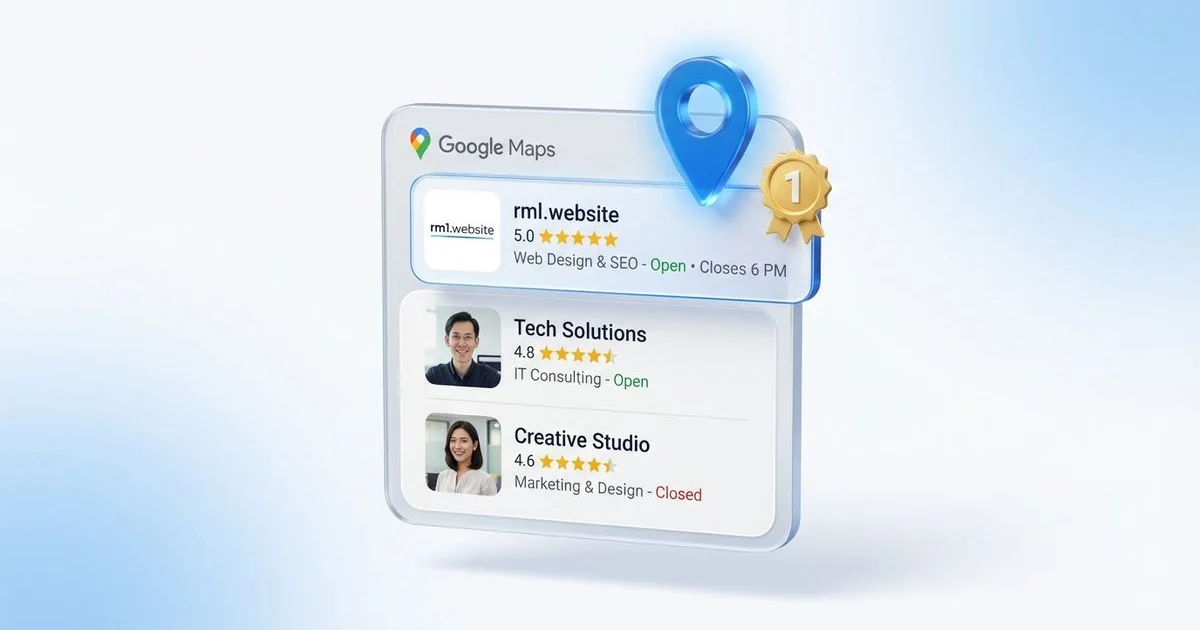
For businesses with a Google Business Profile, location content works hand-in-hand with your local SEO efforts. Read our guide on how to rank in the Google Map Pack for more on this.
Step 6: Maintain and Expand Over Time
A content moat is not something you build once and forget. To maintain its effectiveness, you need to:
Update existing content regularly. Review your pillar pages and top-performing blog posts every 6 months. Update statistics, add new information, and refresh outdated sections.
Publish new content consistently. Add 2 to 4 new pieces of content per month. This shows Google that your website is actively maintained and your expertise is current.
Respond to industry changes. When new regulations, technologies, or trends emerge in your industry, be the first to publish comprehensive content about them. This cements your position as the go-to authority.
Monitor your competitors. Watch what content your competitors are creating and make sure your moat stays wider and deeper. If a competitor publishes a blog post on a topic you have not covered, add it to your content plan.
The Competitive Advantage Is Real
Let me paint a picture of what happens when you have a content moat and your competitor does not.
A potential customer searches “best way to clean aircon in Malaysian weather.” Your comprehensive blog post ranks first because you have topical authority from your 40+ pages of air conditioning content. The customer reads your post, finds it helpful, clicks through to your “aircon cleaning service” page, and contacts you for a quote.
Your competitor, with their 5-page website and no blog, does not appear in the search results at all. They never even had a chance at that customer.
Now multiply this across hundreds of search queries, every single day. That is the power of a content moat.
Getting Started Without the Overwhelm
I understand that mapping out 40+ pages of content and building a comprehensive content moat can feel overwhelming for a Malaysian SME owner who is already busy running their business. This is exactly why the Authority Pack exists.
The Authority Pack provides the complete content strategy, pillar page structure, supporting blog posts, and internal linking framework needed to build topical authority in your niche. Combined with the RM1 Website Package for the technical foundation, you get a content moat that would cost RM15,000+ through a traditional agency.
Start Digging Your Moat Today
Every day you wait is a day your competitors could be building their content moat first. In SEO, the first mover advantage is real. The business that builds comprehensive topical authority first will be significantly harder to displace.
Whether you build your content moat manually or use the Authority Pack to accelerate the process, the important thing is to start. Map your topic universe, create your first pillar page, publish your first cluster of supporting content, and begin establishing the topical authority that will protect your Google rankings for years to come.
Your competitors are reading the same SEO advice you are. The question is who will act on it first.
Need a Website for Your Business?
Get a complete 15-page website for just RM1/day. No hidden fees.
WhatsApp Us